Syracuse University Veteran & Military Learning Scholars Summer Program
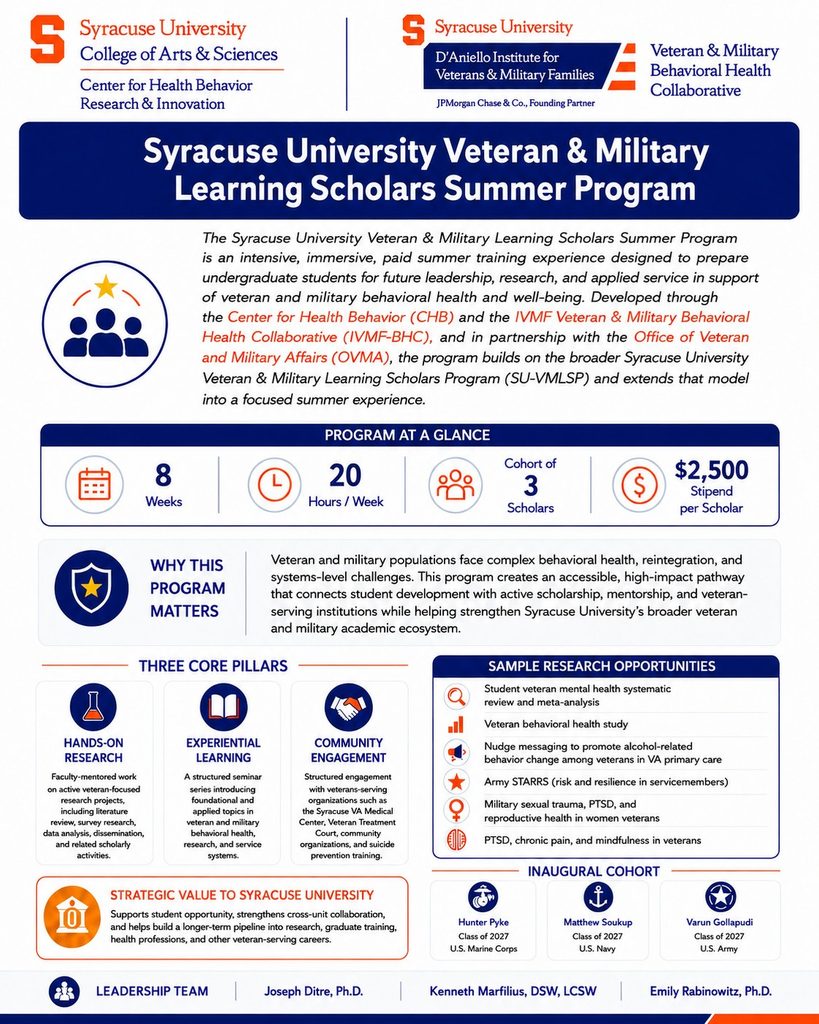
The Syracuse University Veteran & Military Learning Scholars Summer Program is an intensive, immersive, paid summer training experience designed to prepare undergraduate students for future leadership, research, and applied service in support of veteran and military behavioral health and well-being.
Developed through the Center for Health Behavior Research & Innovation (CHB) and the IVMF Veteran & Military Behavioral Health Collaborative, the program builds on the broader Syracuse University Veteran & Military Learning Scholars Program (SU-VMLSP) and extends that model into a focused summer experience. It is designed to provide students, especially student veterans, military-connected students, and those with lived experience or professional interests in the field, with early exposure to the knowledge, mentorship, and applied experiences that shape work with veteran and military populations.
This program reflects a broader opportunity at Syracuse University to strengthen an academic and applied ecosystem around veteran and military well-being. By linking student development with active scholarship, faculty mentorship, and community and systems engagement, the Summer Scholars Program helps advance that ecosystem while creating meaningful pathways for student growth.
Why this program matters
Veteran and military populations face complex behavioral health, reintegration, and systems-level challenges. There is also a clear need for more professionals, researchers, and leaders with the knowledge and experience to serve these communities well. Syracuse University is well positioned to help address that need through CHB, IVMF, VA-connected partnerships, and collaboration across the University’s broader veteran and military ecosystem.
The Summer Scholars Program creates an accessible, high-impact entry point that connects student development with active scholarship, cross-university mentorship, and veteran-serving institutions. It is intended not only to support participating students, but also to strengthen Syracuse’s broader veteran and military academic ecosystem and help build a longer-term pipeline into veteran-serving research, practice, and leadership.
Core Components
Learning
Scholars participate in a structured seminar series introducing foundational and applied topics in veteran and military behavioral health, research, and service systems. Sessions are designed to build knowledge, critical thinking, and understanding of the issues shaping veteran and military well-being.
Research and applied experience
Scholars engage directly in active projects under faculty mentorship through CHB and collaborators connected to the IVMF Veteran & Military Behavioral Health Collaborative, including exposure to veteran-serving research and VA-connected partnerships. This may include literature review, survey research, data analysis, dissemination activities, and related scholarly work.
Mentorship and community engagement
Scholars participate in a cohort-based experience that supports mentorship, belonging, and connection with faculty, peers, and veteran-serving partners. This relationship-centered structure is especially valuable for student veterans and military-connected students and aligns well with Syracuse University’s broader commitment to veteran and military student success.
Strategic value
The Summer Scholars Program is a practical and visible way to advance Syracuse University’s growing work in veteran and military behavioral health. It supports student opportunity, strengthens cross-unit collaboration, and helps build a longer-term pipeline into research, graduate training, health professions, and other veteran-serving careers.
Over time, this program can help expand student pathways into veteran and military-focused work, connect academic learning with applied research and community engagement, strengthen collaboration among CHB, IVMF, OVMA, VA partners, and other university units, and support future external funding, training, and workforce development opportunities.
Scholars participate in at least one structured engagement with a veteran-serving organization, which may include a visit to the Syracuse VA Medical Center, attendance at Veteran Treatment Court, engagement with a community-based organization, or completion of suicide prevention training. This component builds community awareness, professional networks, and a sense of civic responsibility within the field.
Inaugural Cohort
Hunter Pyke
Class of 2027, Veteran, U.S. Marine Corps
Matthew Soukup
Class of 2027, Veteran, U.S. Navy
Varun Gollapudi
Class of 2027, Veteran, U.S. Army
Leadership Team
Joseph Ditre, Ph.D.
Kenneth Marfilius, DSW, LCSW
Emily Rabinowitz, Ph.D.